+86-411-85518978
zwa@zwa.cc


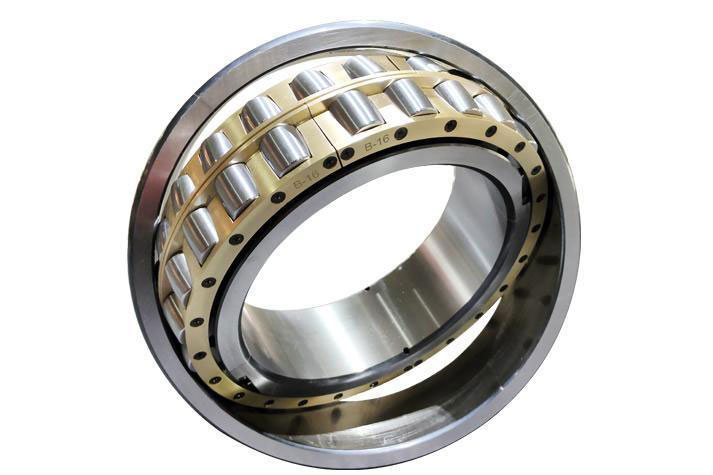
In heavy-duty industrial environments, where machinery must withstand immense radial and axial loads, standard single-row bearings often fall short. This is where Double Row Roller Bearings become indispensable. Designed with two rows of rolling elements, these bearings provide significantly higher load-carrying capacity and enhanced rigidity.
In this guide, we will explore why engineering experts choose double-row configurations, their distinct types, and how they optimize performance in demanding sectors like mining, construction, and heavy machinery.
Why should you opt for a double-row design over a single-row alternative? The primary reasons lie in their structural efficiency:
Increased Load Capacity: By doubling the number of rolling elements, these bearings can support much larger radial and axial loads within a relatively compact space.
Enhanced Rigidity: The wider support base provides greater shaft stability and reduces deflection under heavy stress.
Compact Design: They offer a high power-to-weight ratio, allowing for high performance in applications with limited radial space.
Longer Service Life: Better load distribution across more rollers reduces individual contact stress, extending the overall maintenance cycle.
To help you make an informed procurement decision, here is a technical breakdown of how double-row configurations compare to standard models.
Feature | Single Row Roller Bearing | Double Row Roller Bearing |
Radial Load Capacity | Moderate | High to Very High |
Axial Load Capacity | Limited (Depending on type) | Superior (Bi-directional) |
Misalignment Tolerance | Low | High (specifically for Spherical types) |
Space Efficiency | Takes up less width | Optimized for high-load/narrow-diameter |
Typical Applications | Electric motors, General machinery | Mining, Steel mills, Precision spindles |
Depending on the rolling element and cage design, double-row bearings serve different technical purposes:
Commonly used in machine tool spindles where high precision and high radial stiffness are required. They allow for high-speed operation with minimal friction.
Key Use: High-precision CNC machinery and gearboxes.
These are engineered to manage combined heavy radial and axial loads. They are often found in wheel hubs and heavy-duty transmissions.
Key Use: Automotive axles and heavy industrial hauling equipment.
Perhaps the most robust type, these are inherently self-aligning. They are critical for applications where shaft deflection or misalignment is expected.
Related Reading: Learn more about our Spherical Roller Bearings for Mining Equipment and how they prevent premature failure.
ZWA Bearings specializes in providing high-end solutions for sectors that cannot afford downtime:
Mining & Quarrying: Used in vibrating screens and crushers where impact loads are constant.
Steel & Metals: Essential for rolling mills where extreme pressure and high temperatures coexist.
Paper & Pulp: Supporting large drying cylinders where alignment is difficult to maintain.
Wind Energy: Main shafts of wind turbines require the extreme durability of double-row designs.
A: You should upgrade to double row when your application exceeds the radial load rating of a single row bearing or when you need higher axial stiffness in a compact housing.
A: Not necessarily. While they handle more load, following a strict lubrication schedule and using Sealed vs Open Bearings correctly (based on your environment) ensures long-term reliability.
A: Yes, particularly the double row cylindrical roller bearings (NN series), which are designed for high-speed precision applications like spindle drives.
As a leading China bearing manufacturer, ZWA (Wafangdian ZWA Precision Bearing Manufacturing Co., Ltd.) provides premium double-row solutions that rival international standards. Our products undergo rigorous testing to ensure they meet the demands of global industrial leaders.
Explore our full range: ZWA Product Catalog
Need a Quote? Contact our technical team today for a custom bearing solution.