+86-411-85518978
zwa@zwa.cc


Full complement cylindrical roller bearings are a special category of cylindrical roller bearings that eliminate the traditional cage structure of bearings and maximize the filling of cylindrical rollers between the inner and outer rings. They are rolling bearings designed specifically for low-speed and heavy-duty conditions.
This bearing is mainly composed of three core components: inner ring, outer ring, and cylindrical rollers. It is divided into two types: single row and double row, with various structural forms. Some styles are equipped with auxiliary structures such as retaining edges, locking rings, and snap springs, which can achieve different functions such as positioning, floating, and one-way/two-way axial limit. Most of its inner and outer rings can be separated, making installation and disassembly convenient; The rollers are arranged in a dense parallel pattern, with small radial cross-sectional dimensions and a very compact overall structure. Affected by the design of roller isolation, this type of bearing has a lower limit speed and is suitable for low and medium speed working conditions. It is also the core feature that distinguishes it from cylindrical roller bearings with retainers.
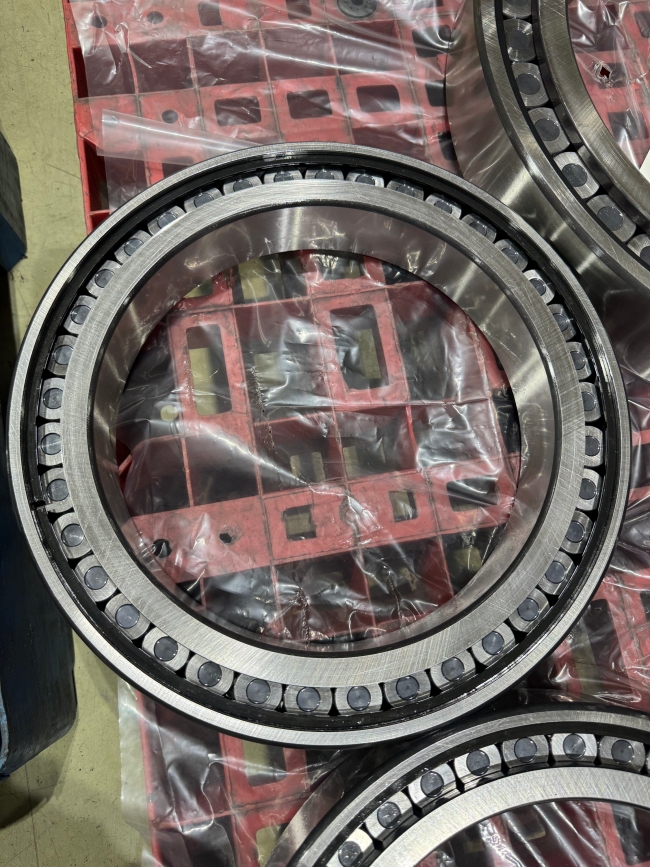
1. Extremely strong load-bearing capacity: This is the most prominent advantage of fully loaded cylindrical roller bearings. Under the same external dimensions, due to the maximum number of rollers, the radial rated load is much higher than that of similar bearings with retainers, and the bearing capacity can be increased by 30% to several times. At the same time, it can smoothly withstand impact loads and adapt to the stress requirements of heavy equipment.
2. Compact structure and high space utilization: The streamlined design without a cage makes the overall volume of the bearing smaller and the radial thickness thinner, which can effectively reduce the equipment assembly space and meet the requirements of mechanical compact design.
3. Excellent rigidity and stable operation: The densely arranged rollers disperse the force, greatly improving the overall stiffness of the bearing. During operation, the deformation is small, and the rotation accuracy is good, which can maintain the stable operation of the equipment for a long time and reduce vibration and wear.
4- Simple structure, easy maintenance: fewer components, fewer fault points, high reliability; The separable structure of the inner and outer circles makes the inspection, replacement, and maintenance process simpler, and reduces the later operation and maintenance costs.
5-Adapt to various installation conditions: single row and double row structures can be used as positioning bearings, semi positioning bearings or floating bearings respectively. Some models allow proper axial displacement of the shaft body, which can adapt to the assembly requirements of different transmission structures.
Additional explanation: Due to structural limitations, the bearing has a lower limit speed and is not suitable for high-speed operation scenarios; When working continuously, it is necessary to ensure the basic load and have certain requirements for lubrication and cleanliness of the working environment. Reasonable lubrication can further extend the service life.
With the characteristics of heavy load, high rigidity, and compact structure, fully loaded cylindrical roller bearings are widely used in industrial equipment with low speed, heavy load, and impact load, covering multiple mainstream industries:
1. Metallurgical rolling industry: Rolling mills, roller conveyors, and cold/hot rolling equipment roll systems bear the enormous radial loads and impacts of rolling operations.
2. Mining engineering machinery: mining crushers, loaders, large winches, excavation equipment, suitable for complex and heavy load conditions in the field.
3-Port lifting machinery: shore cranes, gantry cranes, forklifts, walking and lifting mechanisms, to cope with the continuous heavy load of lifting operations.
4- Transmission and reduction equipment: large planetary reducers, gearboxes, heavy-duty transmission shafts, serving as low-speed transmission support components.
5- Machine tools and general machinery: low-speed heavy-duty rotating parts such as heavy-duty machine tool spindles, large press machines, papermaking machinery, textile heavy-duty rollers, etc.
6- Rail transit and heavy vehicles: heavy-duty support parts for large trucks and engineering vehicles, and large wheelset mechanisms.
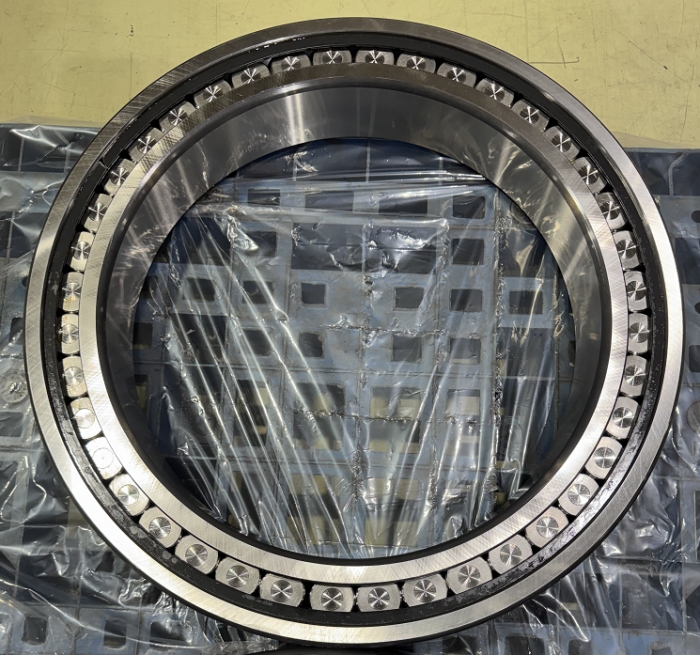
In summary, fully complement cylindrical roller bearings are the core basic components in heavy-duty industrial scenarios, and with their advantages of high load-bearing capacity and high rigidity, they have become an indispensable key component in low-speed heavy machinery equipment.