+86-411-85518978
zwa@zwa.cc


Choosing between a single direction thrust ball bearing and a double direction thrust ball bearing depends mainly on the direction of axial load, shaft design, and equipment operating conditions. A single-direction design is suitable when thrust loads act in one direction only, while a double-direction design is required when axial loads occur in both directions.
A single direction thrust ball bearing is designed to support axial loads in one direction. It consists of one shaft washer, one housing washer, and a ball and cage assembly. The bearing allows the shaft to rotate smoothly while preventing axial movement in the supported direction.
This type of thrust ball bearing is widely used in applications where the load direction remains constant, such as:
Automotive transmissions
Machine tool spindles
Pumps and compressors
Vertical shafts and rotating equipment
Its main advantages include simple construction, easy installation, and cost-effective axial load support.
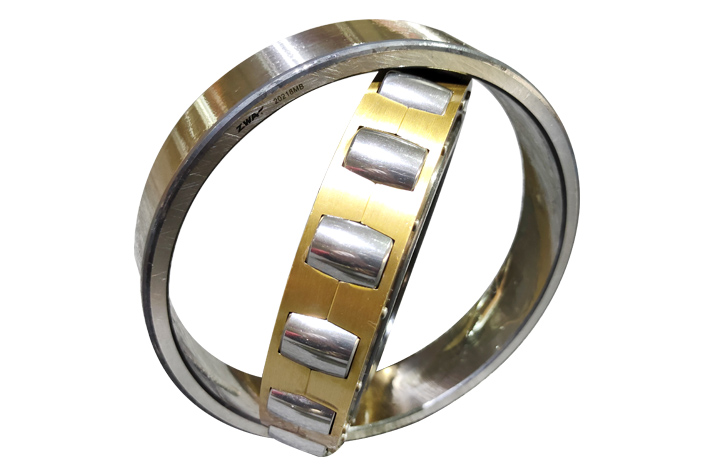
A double direction thrust ball bearing is designed to handle axial loads in two directions. It uses a central shaft washer with two ball and cage assemblies, allowing the bearing to support thrust forces from both sides.
This design is commonly selected for equipment where reversing loads or bidirectional axial forces occur, including:
Precision machine tools
Industrial gear systems
Heavy-duty rotating equipment
Applications with frequent shaft movement changes
Compared with single-direction bearings, double-direction designs provide greater flexibility when load direction cannot be controlled.
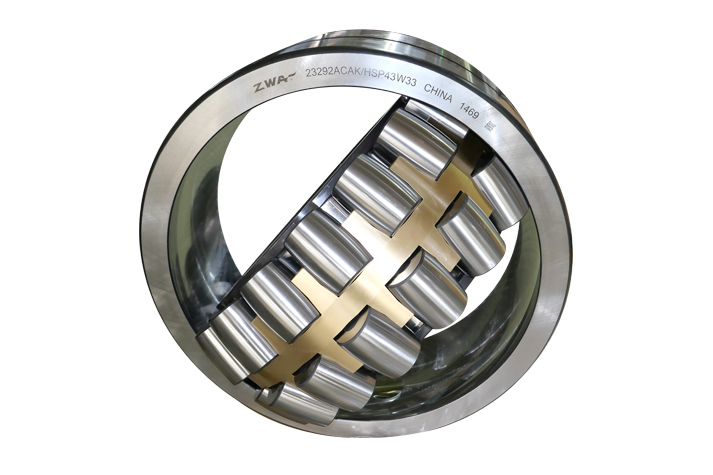
The main difference between these two thrust ball bearing types is their load-carrying direction.
| Feature | Single-Direction TBB | Double-Direction TBB |
|---|---|---|
| Axial load direction | One direction | Two directions |
| Structure | One ball raceway set | Two ball raceway sets |
| Installation | Simpler | Requires more precise positioning |
| Application | Constant thrust loads | Reversing or alternating thrust loads |
| Cost | Generally lower | Higher due to additional components |
Selecting the wrong design can lead to excessive wear, reduced service life, and unexpected equipment downtime.
The correct choice starts with understanding the operating conditions of the shaft.
Choose a single direction thrust ball bearing when:
The axial load always acts in one direction
The shaft has a fixed thrust direction
Equipment design prioritizes simplicity and efficiency
Choose a double direction thrust ball bearing when:
Axial loads alternate between directions
The shaft requires bidirectional positioning accuracy
Equipment experiences reversing operation cycles
Engineers should also consider load magnitude, rotational speed, lubrication conditions, mounting accuracy, and required service life before selecting a bearing.
No. A single-direction thrust ball bearing is not designed for continuous axial loads in the opposite direction. Reverse loading can cause improper contact between the raceway and rolling elements, leading to premature failure.
Not necessarily. A double-direction bearing provides bidirectional load support, but it may increase cost and require more installation space. If the application only produces one-direction axial loads, a single-direction bearing is usually the more efficient solution.
Bearing life depends on several factors, including:
Actual axial load
Operating speed
Lubrication quality
Alignment accuracy
Contamination control
Proper installation
Choosing the correct thrust ball bearing type is essential for achieving stable performance and reducing maintenance costs.
A single-direction thrust ball bearing supports axial loads in one direction, while a double-direction thrust ball bearing supports axial loads in both directions.
For applications requiring bidirectional axial positioning, a double-direction thrust ball bearing is often preferred. For fixed-direction loads, a precision single-direction design may provide better efficiency.
Evaluate the axial load direction, shaft arrangement, operating speed, mounting conditions, and required service life. The bearing design should match the actual working environment rather than only the load rating.
Selecting the right thrust ball bearing ensures reliable operation, longer service life, and improved equipment performance. ZWA Bearings provides professional bearing solutions for various industrial applications, helping customers choose the optimal thrust bearing design for their requirements.